A Smart Base System Moves Water Away Fast and Prevents Pooling
Artificial lawn installation improves drainage by replacing compacted soil and messy grass roots with a layered base that moves water away quickly. Instead of soaking into muddy ground, rain flows through the turf and into a stone base below. From there, it spreads out and drains into the soil evenly. This helps stop puddles, slippery spots, and erosion around your home.
What You Need Before Starting
Good drainage starts before the turf goes down. The ground must be shaped, cleared, and layered the right way. If you skip these steps, water can still collect under the surface.
Before artificial lawn installation begins, you need:
- A clear area free of old grass and roots
- A slight slope so water flows away from your home
- A solid edging system to hold materials in place
- Quality base materials like crushed stone
- A weed barrier if needed
Each part plays a role in how well the yard drains after heavy rain.
Step-by-Step Process That Improves Drainage
The drainage benefits come from the way the system is built. Here is how the process works when done correctly:
- Remove existing grass and soil. This gets rid of roots and compacted dirt that trap water.
- Excavate several inches deep. The depth depends on soil type and expected foot traffic.
- Add a crushed stone base. This layer allows water to move freely between stones.
- Compact the base. A plate compactor presses the stone into a stable surface.
- Check the slope. The area should gently guide water away from structures.
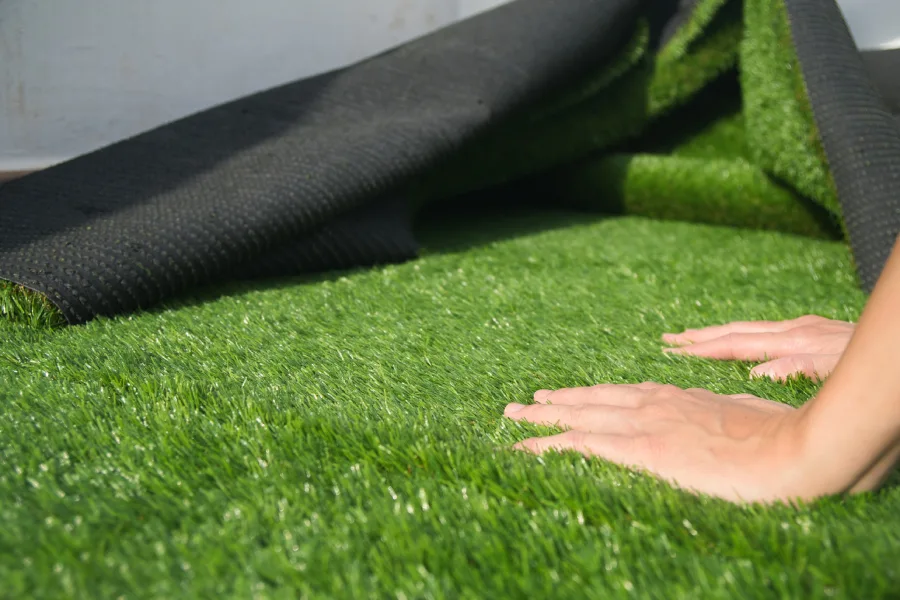
- Install the turf with drainage backing. Most synthetic grass has small holes that let water pass through.
- Secure and finish edges. This keeps everything tight and prevents shifting.
When rain falls, it flows through the turf, into the stone base, and then into the soil below. Because the base is not solid like clay, water spreads out instead of pooling in one spot.
Common Mistakes to Avoid
Some drainage problems happen because steps were skipped or rushed. Even small errors can lead to standing water.
- Not digging deep enough for a proper base
- Using the wrong type of stone
- Failing to compact each layer fully
- Creating low spots during grading
- Installing turf directly over old grass
If the base is thin or uneven, water may collect in dips. Over time, this can lead to odor issues or an unstable surface.
How This Compares to Natural Grass Drainage
Natural grass can absorb some rain, but it also creates problems. Soil becomes compacted from foot traffic. Roots hold moisture near the surface. In heavy storms, yards often turn into muddy patches.
With artificial lawn installation, the drainage system is built in from the start. Water moves downward instead of sitting on top. You do not have to deal with soggy shoes or bare spots where grass once grew.
This is especially helpful in areas that get frequent storms or in backyards where kids and pets play often. A well-built surface dries much faster than traditional grass.
When to Call a Professional
Small DIY projects may work for tiny areas. But larger yards or properties with drainage history need planning. If your yard already has pooling, erosion, or grading issues, it is smart to get expert help.
A professional can test the soil, measure slope, and design a base that handles heavy rain. They can also install added drainage channels if needed. In some cases, working with a landscaping and lawn improvement specialist makes the difference between a surface that lasts and one that fails.
The goal is simple: move water away from the surface safely and quickly. Done right, your yard stays clean, dry, and ready to use shortly after rain.
Ready for Better Drainage and a Cleaner Yard?
If you are dealing with puddles or muddy spots in Madera, CA, we can help improve your yard with expert artificial lawn installation. At Synthetic Grass Solutions, we build every base layer to move water the right way and protect your property from pooling and erosion. Call (559) 258-5673 to talk with us about your space and schedule a consultation.